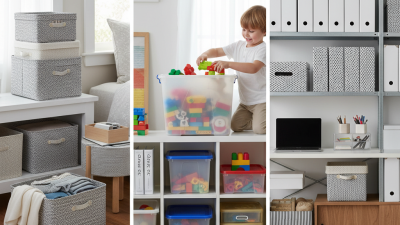
China has become a major sourcing base for household organization products, including the versatile Storage Box. Its manufacturing ecosystem combines resin suppliers, injection-molding factories, printing vendors, and export logistics. This depth can shorten development cycles and support customized sizes, colors, lids, and stacking systems.
Market evidence supports continued demand. Grand View Research reports that the global plastic storage container market was valued at approximately USD 14.6 billion in 2023. It also projects steady growth through 2030. China’s National Bureau of Statistics reported physical-goods online retail sales of about RMB 13.0 trillion in 2023. These figures show scale, but they do not guarantee product quality. That distinction matters.
Reliable global buyers should examine more than factory photographs. They need documented material specifications, mold ownership, production capacity, quality-control procedures, and export experience. Practical checks include lid-fit testing, load testing, drop testing, odor inspection, and dimensional sampling. A supplier may quote a low unit price, yet unstable wall thickness can create costly returns. Small details matter.
Look for evidence. Ask for recent inspection records, sample comparisons, and clear packaging data. Certifications should match the destination market and product application. Sustainability claims also require verification, especially when recycled resin or recyclable packaging is advertised. No supplier-ranking article can replace an on-site audit or independent inspection. That is an uncomfortable limitation.
This guide introduces China’s leading Storage Box manufacturers for global buyers. It focuses on capabilities, customization, quality systems, communication, and commercial fit. The strongest choice is rarely the cheapest one. It is the supplier that performs consistently when the order becomes real.
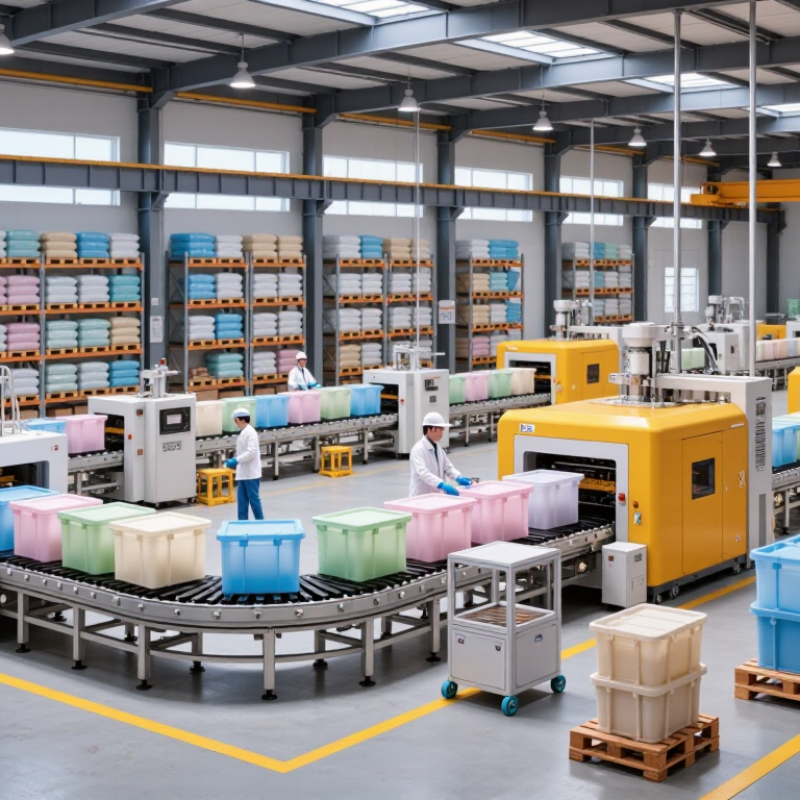
A leading storage box manufacturer in China offers more than attractive samples. It combines practical design, stable production, and dependable quality control. Experienced manufacturers understand how boxes behave in homes, warehouses, retail displays, and long-distance shipping. They select materials according to load, humidity, temperature, and expected use. A reinforced plastic box may suit warehouse stacking, while a fabric organizer needs firm stitching and edge support.
Details reveal real capability. Buyers should examine mold precision, hinge movement, lid alignment, surface finish, and carton protection. Reliable factories can explain their inspection points clearly. They usually test dimensions, weight capacity, color consistency, and drop resistance before shipment. Production records, sample approvals, and traceable batch information also support responsible purchasing. These practices make communication more precise when defects appear.
Strong manufacturers also handle customization with discipline. They confirm drawings, tolerances, packaging requirements, and delivery schedules before production begins. Their sales and technical teams answer questions with evidence, not vague promises. Factory visits or independent inspections can provide useful confirmation. Still, no supplier gets every detail right. A serious manufacturer admits limitations and proposes corrections. Buyers should also question their own assumptions, especially when choosing low prices over long-term performance. Small savings can create larger replacement costs. That lesson is easy to overlook.
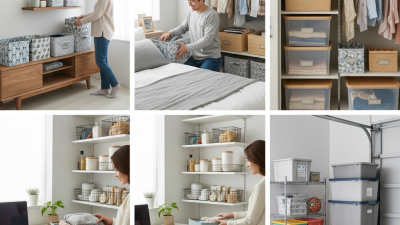
Global buyers need more than attractive storage boxes. Type and material determine durability, shipping cost, and reuse. Stackable lidded bins fit warehouses and kitchens. Nesting boxes reduce empty-space freight. Under-bed containers need low profiles and smooth wheels. Clear polypropylene bins resist moisture and show contents quickly. HDPE boxes provide stronger impact resistance for garages and repeated handling. Foldable fabric boxes save volume, but seams can weaken in damp conditions.
According to the OECD’s Global Plastics Outlook, plastic waste more than doubled between 2000 and 2019. Only 9% was ultimately recycled. This supports choosing durable, mono-material designs where local recycling systems accept them. Bamboo offers a warmer appearance, while steel provides strength and fire resistance. Both add weight and may require protective finishes. A cheap box can become expensive after one cracked lid. The best material is not always the lightest.
Tips: Ask for resin identification, wall thickness, load testing, and hinge-cycle results. Request samples before placing a large order. Test boxes with actual shelf spacing and carton dimensions. For food-contact storage, require documented compliance for the destination market. Recycled content is valuable, although color consistency and odor deserve inspection. I have seen material claims sound impressive while the closure failed first. Specifications need testing.
China’s top storage box manufacturers should be judged beyond attractive catalogs. Global buyers need evidence of stable production, clear communication, and consistent quality. Request business registration details, factory photos, production capacity, and recent inspection records. Then compare these materials with the supplier’s actual answers.
Ask whether the factory produces plastic, fabric, metal, or mixed-material storage boxes in-house. Confirm material grades, dimensions, load limits, color standards, and packaging methods. A reliable supplier should provide samples before accepting a large order. Measure the sample yourself. Check hinges, seams, handles, odors, surface scratches, and lid alignment. Small details matter.
During a factory audit, observe the production line, warehouse labeling, and quality checkpoints. Ask how defective units are recorded and replaced. Do not rely only on a sales representative’s promises. Speak with quality staff when possible. A small inconsistency is not always fatal, but ignoring it is. Some suppliers may show an excellent sample while controlling mass production poorly. Use a written specification sheet, pre-production sample approval, and independent inspection when the order value justifies it. Check response speed too. Slow replies often create costly misunderstandings about packaging, delivery schedules, or design changes. Real reliability appears in repeated actions, not confident language.
China’s top storage box manufacturers serve buyers who need more than attractive designs. Production begins with measurable standards. The ISO Survey 2022 recorded 1,265,216 ISO 9001 certificates worldwide, showing how widely documented quality systems are used. Buyers should request process maps, inspection records, and material declarations before placing volume orders.
Customization must remain practical. Manufacturers can adjust dimensions, wall thickness, hinges, handles, colors, labels, and inner compartments. However, every change can affect stacking strength, tooling cost, and shipping efficiency. A useful sample should be tested under realistic conditions. ASTM D4169 provides distribution testing practices for packaged products, including vibration, impact, and compression. Small details matter. A lid that fits perfectly in the factory may warp after temperature changes.
Reliable quality control combines incoming-material checks, first-article approval, in-process inspections, and final sampling. Digital batch records can connect each box to its resin, production date, operator, and test result. Some factories still depend too heavily on visual inspection. That is a weakness worth questioning. Global buyers should define acceptable defect limits, color tolerances, load requirements, and corrective-action deadlines in writing. Independent pre-shipment inspections can add useful distance between production pressure and approval decisions. Yet inspection alone cannot repair poor tooling or unclear specifications. Experienced purchasing teams often approve a sealed reference sample and compare mass production against it.
| Storage Box Type | Common Materials and Construction | Typical Production Specifications | Customization Options | Relevant Standards and Compliance References | Recommended Quality-Control Checkpoints |
|---|---|---|---|---|---|
| Injection-Molded Plastic Boxes | Polypropylene (PP), ABS, or high-impact polystyrene (HIPS); rigid molded walls with optional lids, hinges, clips, or wheels. |
Typical wall thickness: approximately 1.5–3.0 mm, depending on size and load requirements. Suitable for stackable household, industrial, and retail storage applications. |
Color matching Embossed logo In-mold labeling Custom molds Dividers | REACH requirements for applicable chemical substances in the European market; food-contact requirements only when the product is specifically designed and tested for food use. ISO 9001 may be used as a supplier quality-management reference. | Material verification, dimensional inspection, lid-fit testing, hinge and latch cycle testing, surface-finish inspection, stacking-load testing, and drop testing based on the buyer’s approved specification. |
| Fabric Folding Storage Boxes | Polyester or cotton outer fabric with cardboard, PP board, or MDF support panels; commonly fitted with handles, lids, and reinforced seams. |
Common textile densities include approximately 300D–600D polyester or equivalent fabrics. Foldable construction reduces shipping volume when panels are removable or collapsible. |
Printed patterns Embroidery Woven labels Handle design Compartment layout | REACH chemical restrictions for applicable markets; colorfastness, flammability, and fiber-content labeling should be specified according to the destination market and product application. | Fabric weight and composition checks, color approval, seam-strength testing, dimensional inspection, odor inspection, handle load testing, stitching review, and foldability verification. |
| Nonwoven Storage Bins | Spunbond or needle-punched polypropylene nonwoven fabric with paperboard, PP, or metal reinforcement. |
Typical fabric basis weight: approximately 80–120 g/m² for lightweight household organizers. Usually designed for clothes, toys, accessories, and shelf organization. |
Custom colors Screen printing Clear windows Metal eyelets Fold-flat packing | REACH requirements may apply to restricted substances; packaging materials should be reviewed against the destination market’s packaging and labeling rules. | Basis-weight testing, panel-size measurement, seam and handle inspection, print adhesion testing, odor assessment, load testing, and carton-count verification. |
| Bamboo or Wood Storage Boxes | Bamboo, plywood, MDF, or solid wood with water-based, UV-cured, or other specified surface finishes. |
Panel thickness is commonly selected within approximately 3–12 mm according to the box size and required strength. Moisture control is important for natural wood and bamboo products. |
Laser engraving Staining Paint finish Metal hardware Custom inserts | FSC certification may be requested when certified forest-based material is required. Formaldehyde-emission requirements may apply to composite wood products in certain markets. | Moisture-content inspection, panel thickness measurement, warp and crack inspection, coating adhesion testing, edge-smoothness review, hardware function testing, and odor assessment. |
| Corrugated Paper Storage Boxes | Single-wall or double-wall corrugated board, kraft paper, coated paper, or recycled fiberboard with folding or rigid construction. |
Common structures include 3-ply and 5-ply corrugated board. Compression strength depends on paper grade, flute profile, humidity, and box dimensions. |
Offset printing Flexographic printing Die-cut handles Magnetic closure Custom inserts | Recyclability, recycled-content claims, inks, coatings, and packaging labels should be reviewed according to the destination market. ISTA test procedures may be selected for packaged-product distribution testing. | Board grade verification, caliper measurement, edge-crush or compression testing where specified, print-registration inspection, folding accuracy, moisture inspection, and carton drop testing. |
| Metal Storage Boxes | Tinplate, galvanized steel, stainless steel, or aluminum with stamped, folded, welded, or riveted construction. | Sheet thickness commonly ranges from approximately 0.20–1.00 mm, depending on the metal type, box size, and structural requirements. | Full-color printing Embossing Matte finish Powder coating Custom locks | REACH restrictions may apply to coatings, inks, and metal-related substances. Food-contact compliance must be separately confirmed if the box is intended for direct food storage. | Sheet-thickness verification, burr and sharp-edge inspection, coating adhesion, corrosion-resistance testing where required, lid alignment, closure-force testing, and weld or rivet inspection. |
| Vacuum-Formed or Clear Display Boxes | PET, RPET, PVC, or HIPS sheets formed over a mold; used for visibility, retail presentation, and lightweight organization. | Typical sheet thickness is approximately 0.30–1.50 mm, depending on the product size, transparency requirement, and rigidity. | Clear or tinted finish Printed graphics Hanging holes Custom inserts Tamper features | Recycled-content claims should be supported by traceable documentation. REACH requirements may apply, while food-contact or child-product requirements depend on the intended use. | Sheet-thickness checks, transparency and haze review, dimensional inspection, edge-trim inspection, crack and whitening checks, closure testing, and packaging-protection verification. |
| General Buyer Quality Plan | Applies to the approved material, artwork, dimensions, hardware, packaging, and product-use requirements defined in the purchase specification. | A complete technical file should include a product drawing, bill of materials, color standard, tolerance requirements, approved sample, packaging specification, and inspection criteria. | Pre-production sample Golden sample Private label packaging Factory audit Third-party inspection | ISO 9001 can serve as a quality-management reference. ISO 2859-1 sampling plans may be used when the buyer specifies an AQL-based inspection. The actual acceptance limits must be agreed in writing before production. | Typical stages include pre-production approval, first-article inspection, in-process checks, final random inspection, carton-drop evaluation, quantity verification, barcode scanning, and review of corrective actions for nonconformities. |
Choosing storage box manufacturers in China requires more than comparing unit prices. Ask for recent product samples, material specifications, carton dimensions, and verified production capacity. A factory may quote polypropylene, bamboo, or fabric storage boxes differently because thickness and hardware vary. Confirm the MOQ, color options, logo process, inspection standard, and production schedule in writing. Keep one approved sample beside the purchase order.
Shipping details can change the real cost. Request quotations under clear Incoterms, such as FOB or DDP, and check what each offer includes. Confirm port charges, inland transport, export documents, insurance, and destination delivery. Carton size matters. A low-priced box can become expensive when poor packing increases volumetric weight or causes crushed corners. Use reinforced cartons, internal separators, and moisture protection when the route includes humid ports. Delays happen.
International buyers should verify the correct HS classification with a customs broker before payment. Duties, VAT, labeling rules, and product-safety requirements depend on the destination market. Request a commercial invoice, packing list, bill of lading, and any applicable test reports. Do not rely on an informal message as proof of compliance. A spreadsheet helps, but it can still miss local fees or seasonal port congestion. Build a reasonable buffer into the delivery plan, inspect before shipment, and record defects with photographs. Mistakes are possible, even with an experienced supplier.