Leave Your Message
A Cardboard Box may look ordinary, but its design balances strength, weight, cost, and protection. Made from corrugated fiberboard, it usually has a fluted inner layer between flat sheets. That ridged center helps the box resist pressure while staying light enough to lift and ship. Run a finger across the cut edge and you can see the small arches that give the material much of its structure.
A box is more than a container. It can protect glass jars from bumps, keep books together on a shelf, or carry produce from a packing line to a shop. The right choice depends on what goes inside, how far it travels, and whether it faces moisture or stacking. A small box can still fail if its contents shift. That detail is easy to miss.
As a practical design principle, packaging specialists often stress matching the box to its job: “Good packaging protects the product without using more material than necessary.” This is an editorial summary, not a verified quotation from a named expert. A reliable guide should not invent an expert attribution. The sections ahead will explain what cardboard boxes are made of, how common styles differ, and how people choose, use, and recycle them. They will also look at real trade-offs: stronger board can add weight, while a lighter box may need careful handling. No box is perfect. Its value depends on the product, the route, and the way it is used.
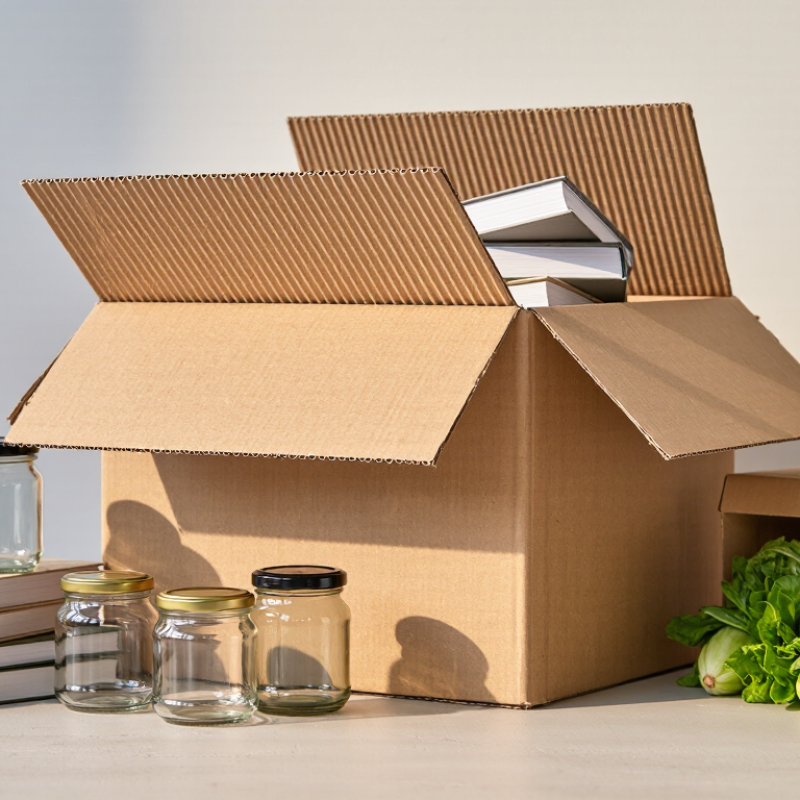
A cardboard box is a folded container made from paper-based board. The term is useful, but not perfectly precise. In packaging work, “cardboard” often means corrugated board, which has several bonded layers. The outer sheets are called liners. Between them sits a wavy inner sheet called fluting. This fluted layer creates air spaces, adding stiffness without excessive weight. The Fibre Box Association explains that corrugated board commonly uses three layers: two liners and one fluted medium. Heavier boxes may use five or seven layers for greater stacking strength.
A box’s basic structure includes panels, fold lines, flaps, and joints. The panels form its walls. Flaps close the top and bottom. Fold lines guide accurate assembly, while adhesive or stitching holds the joint together. Box performance depends on board grade, flute size, moisture, and load direction. Smithers’ report, The Future of Corrugated Packaging to 2028, projects the global corrugated packaging market to exceed 205 billion US dollars by 2028. That growth reflects demand for lightweight, protective shipping formats. Still, a larger market does not guarantee better design. Poor sizing can waste material and increase movement inside the box.
Tips: Choose a box with limited empty space. Press the flaps flat before sealing. For fragile contents, test stacking and corner compression under realistic warehouse conditions. The European Federation of Corrugated Board Manufacturers reports European corrugated production at roughly 50 billion square metres annually, showing how small design decisions scale quickly. Moisture remains a weak point. Even strong board can soften after prolonged exposure.
| Data Dimension | Component or Feature | Definition or Typical Specification | Primary Function | Common Use |
|---|---|---|---|---|
| Basic Definition | Cardboard box | A folding or assembled container made from paper-based board, commonly used to hold, protect, store, and transport products. | Provides a lightweight protective enclosure. | Packaging, storage, moving, shipping, and retail presentation. |
| Main Material | Paperboard or corrugated fiberboard | Paperboard is a relatively thick sheet of paper. Corrugated fiberboard combines flat paper liners with a fluted inner layer. | Creates the box walls and provides structural support. | Paperboard cartons for lighter products; corrugated boxes for transport and heavier loads. |
| Structural Layer | Outer liner | A flat paper layer forming the outside surface of corrugated board. | Protects the surface and provides a printable exterior. | Shipping cartons, product boxes, and protective packaging. |
| Structural Layer | Inner liner | A flat paper layer positioned on the inside of corrugated board. | Creates the interior wall and helps contain the packaged item. | Boxes requiring an enclosed, stable internal surface. |
| Structural Layer | Fluted medium | A wave-shaped paper layer located between liners in corrugated fiberboard. | Improves cushioning, bending resistance, and stacking strength. | Shipping containers and protective packaging for fragile goods. |
| Box Panel | Top and bottom panels | Flat sections that close the upper and lower openings of the box. | Enclose the contents and distribute pressure across the package. | Folding cartons and regular slotted containers. |
| Box Panel | Side panels | Vertical sections forming the length and width walls of the container. | Define the internal volume and support the box shape. | Nearly all rectangular cardboard boxes. |
| Box Feature | Flaps | Extensions of the box panels that fold inward or outward to close the box. | Secure the opening and can overlap for added strength. | Shipping cartons, mailing boxes, and storage boxes. |
| Box Feature | Seam or manufacturer's joint | The area where the box blank is joined, commonly with adhesive, tape, or stitching. | Connects the panels into a finished box shape. | Pre-glued cartons and assembled corrugated containers. |
| Design Variable | Length, width, and height | The three basic internal or external measurements used to define box capacity and fit. | Determines product compatibility, material use, and shipping volume. | Custom packaging, inventory storage, and distribution planning. |
| Design Variable | Board thickness | The combined thickness of the paper layers and, when applicable, the corrugated fluting. | Influences stiffness, cushioning, stacking performance, and weight. | Thin board for cartons; thicker corrugated board for transport packaging. |
| Performance | Compression resistance | The ability of a box to resist crushing when pressure is applied, especially during stacking. | Helps protect contents under warehouse and transport loads. | Stacked cartons and palletized shipments. |
| Performance | Cushioning ability | The capacity of corrugated structure and empty space to reduce the effect of impacts and vibration. | Reduces damage caused by handling and movement. | Fragile products, electronics, glassware, and household goods. |
| Surface Function | Printing and labeling area | The outer surface available for product information, handling instructions, identification marks, and graphics. | Communicates information and supports package identification. | Shipping labels, recycling symbols, product descriptions, and handling warnings. |
| Protection | Moisture resistance | A property that may be improved through coatings, treatments, or protective inner packaging; ordinary cardboard is not waterproof. | Limits damage from humidity, splashes, or brief exposure to moisture. | Food packaging, warehouse storage, and products requiring additional moisture protection. |
| Sustainability | Recyclability | Clean and dry paper-based boxes are commonly accepted in paper recycling systems, subject to local rules. | Allows fiber recovery and reduces disposal volume. | Post-use packaging collection and recycled paper production. |
| End-of-Life | Reuse and disposal | Boxes can often be reused when clean and structurally sound, then flattened for recycling when no longer serviceable. | Extends material use and simplifies handling after use. | Moving, storage, returns, household organization, and recycling. |