Leave Your Message
A Woodwork Jewelry Box is more than a small container for rings, earrings, and keepsakes. It is a carefully planned object that combines timber selection, joinery, surface preparation, and interior organization. Unlike mass-produced cases, each box can reveal the maker’s choices through visible grain, slight color variation, and hand-finished edges. That character matters.
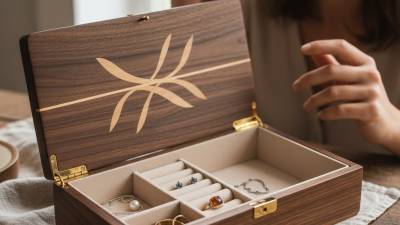
Doug Stowe, a respected woodworking teacher and author, describes woodworking as “a process of discovery.” His words fit this project closely. Making a Woodwork Jewelry Box often begins with a practical question: what should it protect, and how should it feel in the hand? A craftsperson may choose walnut for its deep brown tone, maple for contrast, or cherry for its warm aging color. The wood must be dry, stable, and free from serious defects.
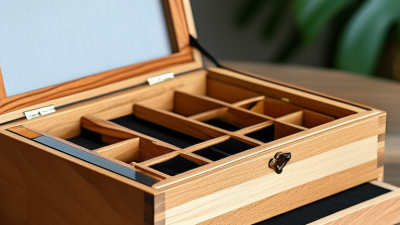
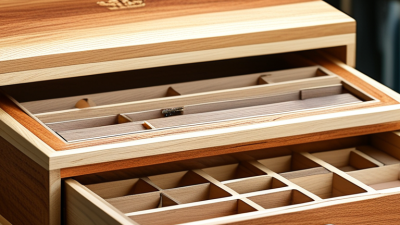
Construction usually involves measuring panels, cutting accurate joints, and fitting a lid with hinges or a sliding mechanism. Small compartments may be added with thin dividers. Felt or fabric can protect delicate surfaces inside. Sanding must progress carefully, because careless pressure can soften crisp corners. Finish comes later, often as oil, wax, or a low-sheen protective coating.
The process is not perfectly predictable. Grain can tear. A lid may sit slightly unevenly. These flaws deserve attention, not concealment. They show why patience, testing, and experienced judgment remain essential. This guide examines each stage, from design and material selection to assembly, finishing, and long-term care.
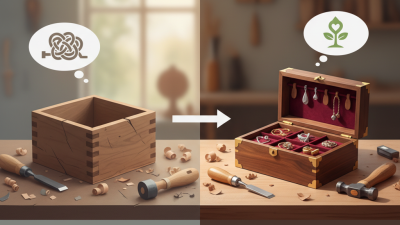
A woodwork jewelry box is a small storage case made mainly from solid wood, plywood, or wood veneer. It protects rings, necklaces, earrings, and other personal ornaments from dust, scratches, and tangling. Unlike mass-produced plastic containers, each wooden box shows grain, joinery, and finishing choices. The material also adds weight and warmth. It feels substantial in the hand.
The market context is significant. Grand View Research valued the global jewelry market at approximately 353.26 billion US dollars in 2023. Yet reliable reports rarely separate wooden jewelry boxes as their own category. That gap deserves caution. It prevents exaggerated claims about demand. The FAO Global Forest Resources Assessment 2020 reported about 4.06 billion hectares of forest worldwide, covering roughly 31% of global land. Responsible makers should still verify wood sources rather than assume every timber choice is sustainable.
Construction usually begins with kiln-dried boards or stable panels. The maker measures the interior around the intended jewelry. Thin compartments may use dividers, trays, or removable cushions. Small boxes often rely on mitred corners, dovetail joints, or dowels. A craftsman then sands the surfaces gradually, avoiding rounded edges where precise fitting matters. Hinges are aligned before finishing, not afterward. Oil, wax, shellac, or water-based coatings can reveal the grain while reducing moisture exchange. The USDA Forest Products Laboratory notes that indoor wood commonly reaches about 6% to 8% moisture content, though local conditions change that figure. Wood can still move. That is the part many descriptions overlook.
| Data Dimension | Typical Material or Step | Accurate Description and Practical Information |
|---|---|---|
| Definition | Handcrafted wooden storage case | A woodwork jewelry box is a small container made primarily from wood and designed to organize and protect rings, earrings, necklaces, bracelets, watches, and other personal accessories. |
| Common Wood Choices | Hardwood, plywood, or medium-density fiberboard | Hardwoods such as maple, cherry, walnut, oak, and beech are commonly selected for their strength and appearance. Plywood and medium-density fiberboard can provide stable, economical alternatives when properly finished. |
| Typical Size | Approximately 20–35 cm wide, 12–25 cm deep, and 8–18 cm high | The final dimensions depend on the intended capacity. Compact boxes suit rings and earrings, while larger designs may include separate compartments for necklaces and watches. |
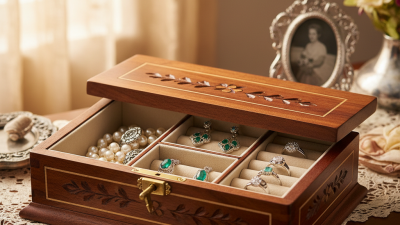
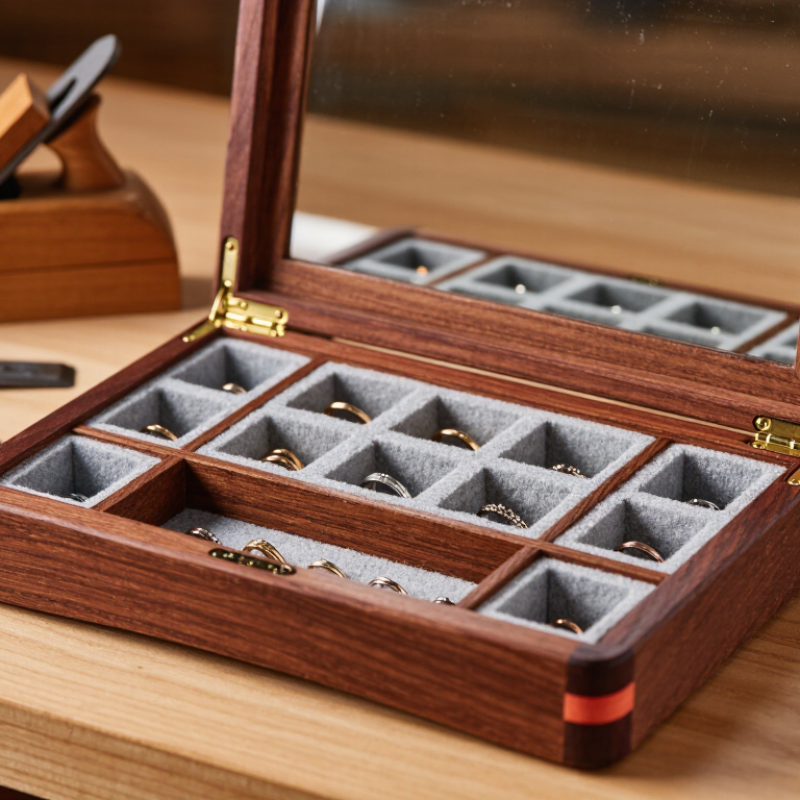
| Main Components | Base, side panels, lid, hinges, interior fittings, and closure | A basic box usually has a bottom, four walls, and a hinged or removable lid. Optional components include dividers, ring rolls, necklace hooks, drawers, a mirror, and a lock or magnetic catch. |
| Design Planning | Sketch, measurements, joinery plan, and hardware layout | The maker determines the box dimensions, wood thickness, lid movement, compartment arrangement, and hardware position before cutting the material. Accurate planning helps prevent misaligned joints and uneven gaps. |
| Wood Preparation | Flattening, cutting, and sanding boards | Wood is inspected for defects, cut to size, and flattened when necessary. The surfaces are progressively sanded to remove saw marks and prepare the material for assembly and finishing. |
| Joinery Options | Butt joints, rabbet joints, miter joints, box joints, or dovetails | Butt joints are simple to make, while rabbet joints add a supporting shoulder. Miter joints provide clean corners, and box joints or dovetails offer stronger mechanical connections and decorative detail. |
| Assembly Method | Wood adhesive, clamps, and mechanical hardware | The panels are dry-fitted first, then joined with suitable wood adhesive and held with clamps while the adhesive cures. Hinges, catches, and other hardware are installed after the main structure is stable. |
| Lid Construction | Solid lid, framed lid, or veneered panel | A lid may be made from a single panel or a frame surrounding a thinner center panel. A floating panel design can help reduce stress caused by seasonal wood movement. |
| Interior Protection | Felt, velvet, cotton fabric, leather, or soft lining | Soft lining helps reduce scratches on jewelry and prevents items from sliding against the wooden interior. Fabric is commonly attached to removable trays, dividers, and ring cushions. |
| Surface Preparation | Fine sanding and edge smoothing | Edges and corners are softened to improve handling. The surface is normally sanded through several increasingly fine grits until it feels smooth and is free of visible machining marks. |
| Finishing Options | Oil, wax, shellac, lacquer, or water-based finish | A finish enhances the wood grain and provides varying levels of protection against moisture, stains, and abrasion. The chosen product should be applied according to its curing and ventilation requirements. |
| Hardware | Small hinges, magnetic catch, clasp, screws, and optional lock | Hardware should be proportionate to the box and installed carefully to avoid splitting the wood. Pilot holes are useful when placing small screws near panel edges. |
| Estimated Build Time | About 6–20 working hours for a basic handmade box | Time varies with the wood type, joinery, number of compartments, decorative details, finishing schedule, and required drying or curing periods. |
| Essential Tools | Saw, ruler, square, clamps, drill, chisels, and sandpaper | A saw and measuring tools are needed for accurate cuts. Clamps hold joints during assembly, while a drill, chisels, and sanding tools support hardware installation and surface preparation. |
| Quality Checks | Square corners, smooth movement, secure joints, and clean finish | Before use, the maker checks that the box sits flat, the lid opens without binding, the hinges are aligned, the interior lining is secure, and no sharp edges or loose hardware remain. |
| Care Requirements | Dry dusting, controlled humidity, and gentle handling | The box should be kept away from prolonged direct sunlight, standing water, and extreme humidity changes. A soft dry or slightly damp cloth is generally suitable for routine cleaning. |
| Primary Benefits | Organization, protection, durability, and decorative value | A well-made wooden jewelry box keeps accessories separated, reduces tangling and surface damage, and can serve as a durable decorative piece that reflects the character of the selected wood. |
Note: Dimensions, materials, construction methods, and build time may vary according to the box design, available tools, wood movement, and the maker’s level of woodworking experience.